Digital signage retail strategies help brick-and-mortar stores create more engaging, flexible, and sales-focused customer experiences.
- Personalize promotions by time, season, location, or inventory.
- Use interactive displays to guide shoppers and support staff.
- Place screens strategically near entrances, aisles, checkout areas, and windows.
- Connect signage with QR codes, POS systems, loyalty programs, and real-time updates.
- Combine digital displays with traditional signage for stronger brand visibility.
Brick-and-mortar retail is far from outdated, but the way customers interact with physical stores has changed. Shoppers are used to fast, visual, and personalized experiences online. When they walk into a store, they expect the same level of convenience, clarity, and engagement.
Digital signage retail strategies can make a major difference. Today’s digital signs do much more than basic screens showing a slideshow of promotions.
Modern retail digital signage can help stores attract attention, guide customers, promote products, highlight limited-time offers, and create a stronger overall brand experience. Whether you operate a boutique, grocery store, showroom, shopping center, franchise location, or service-based retail space, digital signage helps you communicate faster and more effectively.
Let’s review the retail digital signage trends every brick-and-mortar store should know:
1. Personalized In-Store Messaging
Personalized and timely messaging is among the biggest trends in digital signage for retail. Instead of displaying the same promotion all day, retailers can use digital screens to change content based on the time, season, location, or customer behavior.
A coffee shop could promote breakfast specials in the morning and cold drinks in the afternoon. A clothing store might spotlight its seasonal collections near the entrance and show off clearance items near the checkout area. A grocery store may highlight weekend meal ideas, loyalty offers, or weather-related promotions.
Customers are more likely to notice content that feels timely and useful. Stores can respond quickly when inventory, sales goals, or customer demand changes.
For multi-location retailers, this is especially valuable. Digital signage can keep brand standards consistent while allowing individual stores to promote local offers or location-specific messages.
2. Interactive Displays to Drive Customer Action
Interactive displays are becoming a major part of digital signage in retail. Touchscreen kiosks, digital catalogs, product finders, and interactive wayfinding displays give customers more control over their shopping experience.
This especially benefits larger retail environments, showrooms, malls, dealerships, medical retail spaces, and specialty stores. Customers can search for products, compare options, check features, explore services, or find the right department without waiting for an employee.
For example, a furniture showroom could use an interactive display to let customers browse available finishes, dimensions, and room layouts. A retail center could use a digital directory to help visitors find tenants quickly. A beauty retailer could use a screen to explain product benefits, routines, or promotions.
3. Digital Signage as Part of the Brand Experience
A screen on the wall isn’t automatically effective. Design matters for digital signage in retail store environments.
The best digital signage feels like a natural part of the store. It reflects the brand’s colors, typography, photography style, tone, and overall environment. It supports the same message customers see on exterior signs, window graphics, wall graphics, packaging, and advertising.
Retailers can use digital signage to tell their brand story, showcase customer reviews, promote new arrivals, display lifestyle imagery, feature social media content, or highlight product benefits. In a competitive retail environment, these details help create a stronger impression.
4. Faster Promotions and Real-Time Updates
Traditional printed signs, posters, and banners are still useful, but they require production time. Digital signage for retail locations allows businesses to update messaging quickly without waiting for new materials to be printed and installed.
This helps with:
- Flash sales
- Holiday promotions
- New product launches
- Clearance events
- Loyalty program reminders
- Limited-time offers
- Daily or weekly specials
- Seasonal campaigns
For retailers that frequently change promotions, digital signage can reduce waste and simplify campaign management. It also helps stores stay more responsive. If a product sells faster than expected, the message can be changed. If a new offer needs to be pushed before the weekend, it can be updated quickly.
5. In-Store Retail Media and Vendor Advertising
Retailers can use displays to promote vendor products, partner brands, or paid placements inside the store. Large retailers have already embraced in-store media networks, but smaller retailers can use a similar concept on a local scale.
A convenience store may feature beverage or snack promotions. A salon may highlight haircare brands. A boutique may feature partner products or local collaborations.
In the right setting, digital signage can become more than a marketing tool. It can become a revenue-generating asset.
The key is balance. The content should still feel relevant to the customer and aligned with the store experience. Too many ads can feel distracting, but well-placed vendor promotions can support sales while adding value for shoppers.
6. Smarter Screen Placement Throughout the Store
Where you place digital signage matters just as much as what you display.
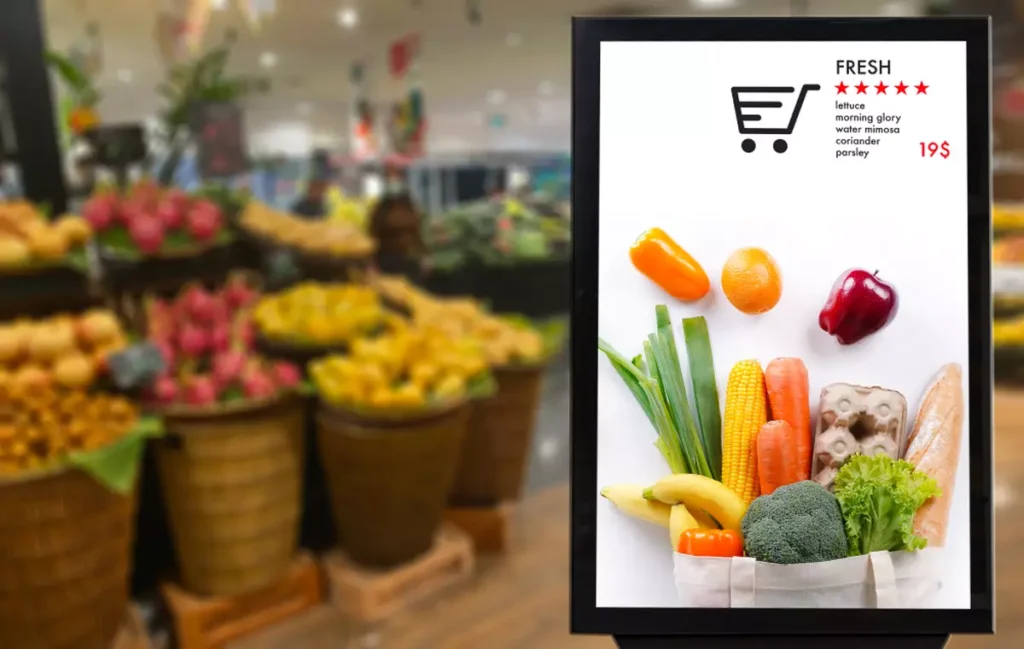
As just one example, a screen near the front entrance should serve a different purpose than one near checkout or department aisles. Smart placement helps ensure customers see the right message at the right moment.
- Entrance displays are ideal for brand messaging, current promotions, and seasonal campaigns.
- Screens near aisles or departments can explain product features, show comparisons, or suggest add-ons.
- Checkout displays can promote loyalty programs, impulse buys, financing options, or upcoming sales.
- Window-facing displays can help attract foot traffic from the street or parking lot.
A professional signage partner can help evaluate viewing angles, traffic flow, mounting requirements, lighting, electrical access, and local code considerations. This helps retailers avoid the common mistake of installing screens where they look good on paper but don’t fit the actual space.
7. Integration With Other Retail Technology
Many retailers now use displays alongside point-of-sale systems, inventory tools, QR codes, mobile campaigns, loyalty programs, and analytics platforms. This lets signage support a larger customer journey.
For example, a screen can promote products that are currently in stock. QR codes can send shoppers to product pages, coupons, appointment forms, reviews, or loyalty signups. Multi-location retailers can schedule content across different stores from one system. Analytics can help teams understand which promotions or messages perform best.
8. Better Display Quality and More Durable Hardware
As digital signage becomes more common, customers grow more aware of its quality. A dim screen, blurry image, poor mount, bad placement, or broken display can hurt a store’s perception.
Retailers should consider:
- Visibility factors (brightness, screen size, viewing distance, glare)
- Mounting location
- Maintenance access
- Indoor or outdoor usage
- Window-facing possibilities
Outdoor and window displays often require higher brightness and more durable equipment. Interior screens often must complement the store design without overwhelming the space. In every case, the hardware should match the environment and the purpose of the sign.
This is one reason it is important to work with experienced sign professionals. The right partner can help retailers choose signage solutions that are attractive, durable, code-compliant, and properly installed.
9. Combining Digital and Traditional Signage
Digital signage doesn’t eliminate the need for traditional signs. In many retail environments, the strongest results come from combining both.
Exterior building signs, illuminated channel letters, monument signs, window graphics, wall graphics, ADA signs, banners, wayfinding signs, and digital displays all play different roles.
Static signage creates structure, brand recognition, and long-term visibility. Digital signage adds motion, flexibility, and timely messaging. Together, they create a more complete impression.
For example, a storefront sign helps customers find the business. Window graphics attract attention and promote the brand. Interior wayfinding helps people navigate. And digital displays highlight current offers and encourage action.
Deciding What Your Store Needs
Before investing in digital signage, retailers should start with clear goals. The best solution depends on the store layout, customer behavior, branding, budget, and content needs.
Ask these questions:
- What action do you want customers to take?
- Where do customers pause, wait, or make buying decisions?
- Will your team update content regularly?
- Do you need indoor, outdoor, or window-facing displays?
- Should the signage support sales, wayfinding, branding, or all three?
- Who will manage the content?
- How will the signage fit with your existing signs and graphics?
A thoughtful plan helps ensure your digital signage investment supports your business instead of becoming another screen on the wall.
Let Us Bring Your Retail Signage into the Future
Successful digital signage in retail is not only about choosing a screen. It’s about creating the right strategy, design, placement, installation, and content plan.
SignCenters helps businesses design, fabricate, and install custom signage solutions that make an impact. From exterior signs and window graphics to interior signs, ADA signage, and digital displays, our team can help your retail location create a stronger customer experience from the storefront to the checkout counter.
For your next store opening, remodel, rebrand, or signage upgrade, partner with a team that understands how to turn visibility into results.